7 Common Problems Manufacturing Plants Face with Manual Gate Entry Systems
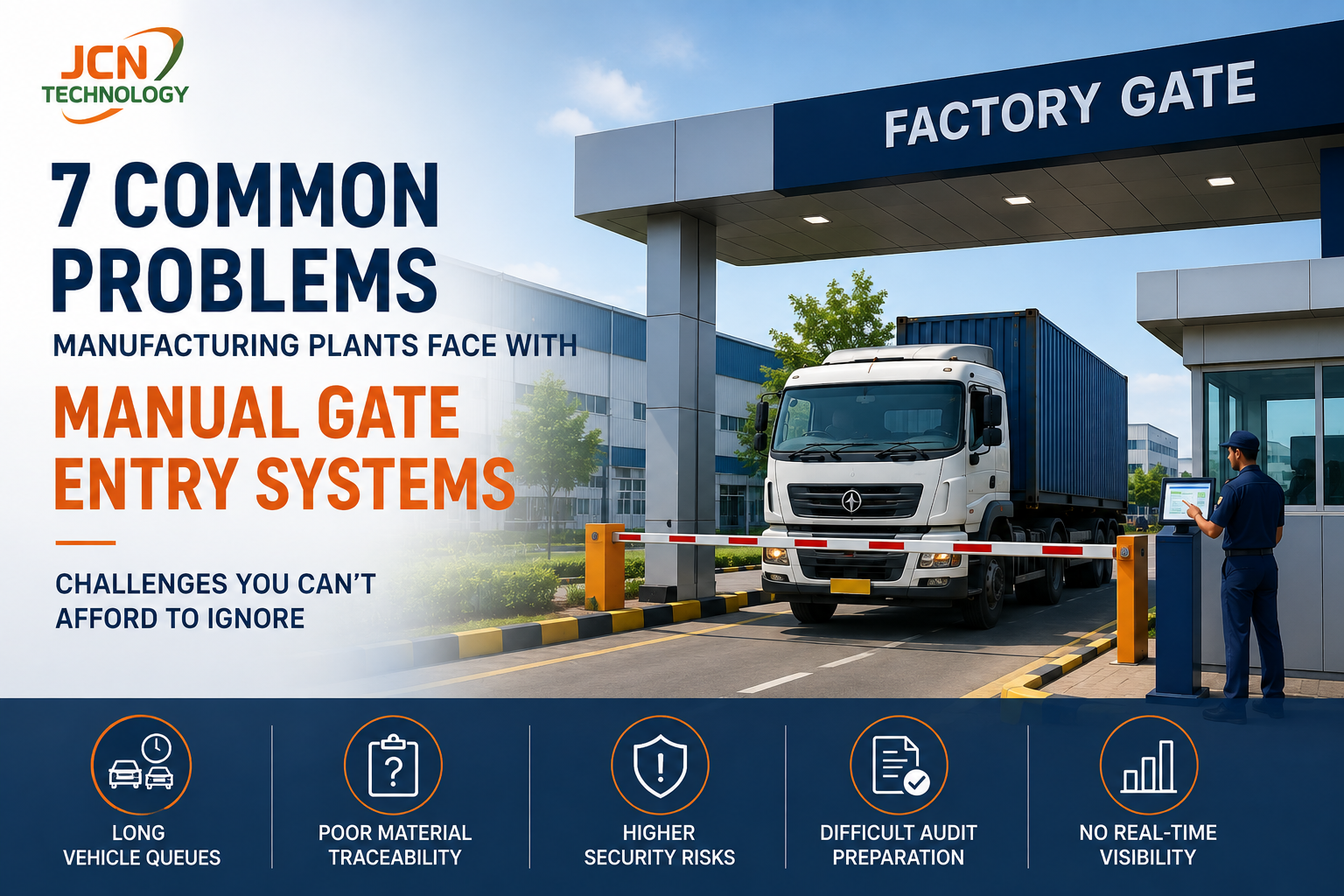
For manufacturing plants, the gate is much more than an entry and exit point. It controls the movement of vehicles, materials, visitors, and contractors while serving as the first checkpoint for operational security.
Despite advances in manufacturing technology, many organizations still rely on manual gate registers, handwritten gate passes, and spreadsheets to manage these activities.
While these methods may appear cost effective, they often create inefficiencies that affect security, productivity, and compliance.
Here are seven common challenges manufacturers face with manual gate entry systems.
1. Long Vehicle Queues
Manual verification takes time.
Security personnel must verify documents, record vehicle details, obtain approvals, and maintain physical registers before allowing entry or exit.
During peak hours, this often results in long queues, delayed dispatches, and frustrated transport partners.
A digital gate management system automates these processes and reduces vehicle turnaround time.
2. Poor Material Traceability
Every material movement should be recorded accurately.
However, paper registers make it difficult to answer questions such as:
- Which vehicle transported the material?
- Who approved the dispatch?
- What time did the vehicle leave?
- Was the delivery completed?
Without centralized records, tracing material movement becomes a manual and time-consuming task.
3. Higher Security Risks
Factory gates are responsible for protecting company assets.
Manual processes increase the chances of:
- Unauthorized vehicle entry
- Incorrect gate pass approvals
- Missing documentation
- Unrecorded material movement
Digital records and approval workflows help strengthen operational security while creating complete audit trails.
4. Difficult Audit Preparation
During internal or external audits, companies are often asked to provide historical records of material movement and gate activities.
Searching through paper registers or multiple spreadsheets can take hours or even days.
Digital systems make these records searchable and instantly available whenever required.
5. Limited Visibility Across Departments
Gate information is valuable to multiple teams, including:
- Security
- Stores
- Logistics
- Procurement
- Operations
With manual systems, every department maintains separate records, making collaboration difficult.
A centralized platform provides a single source of truth for all stakeholders.
6. Human Errors
Manual data entry increases the possibility of:
- Duplicate entries
- Missing information
- Incorrect vehicle numbers
- Wrong timestamps
- Misplaced registers
Even small errors can create inventory mismatches and operational confusion.
Automation significantly reduces these risks.
7. No Real-Time Reporting
Decision-makers need real-time operational insights.
Questions like:
- How many vehicles entered today?
- What materials are awaiting dispatch?
- Which approvals are pending?
should be answered instantly.
Manual systems rarely provide this level of visibility, forcing managers to rely on delayed reports.
Digital dashboards solve this challenge by presenting live operational data.
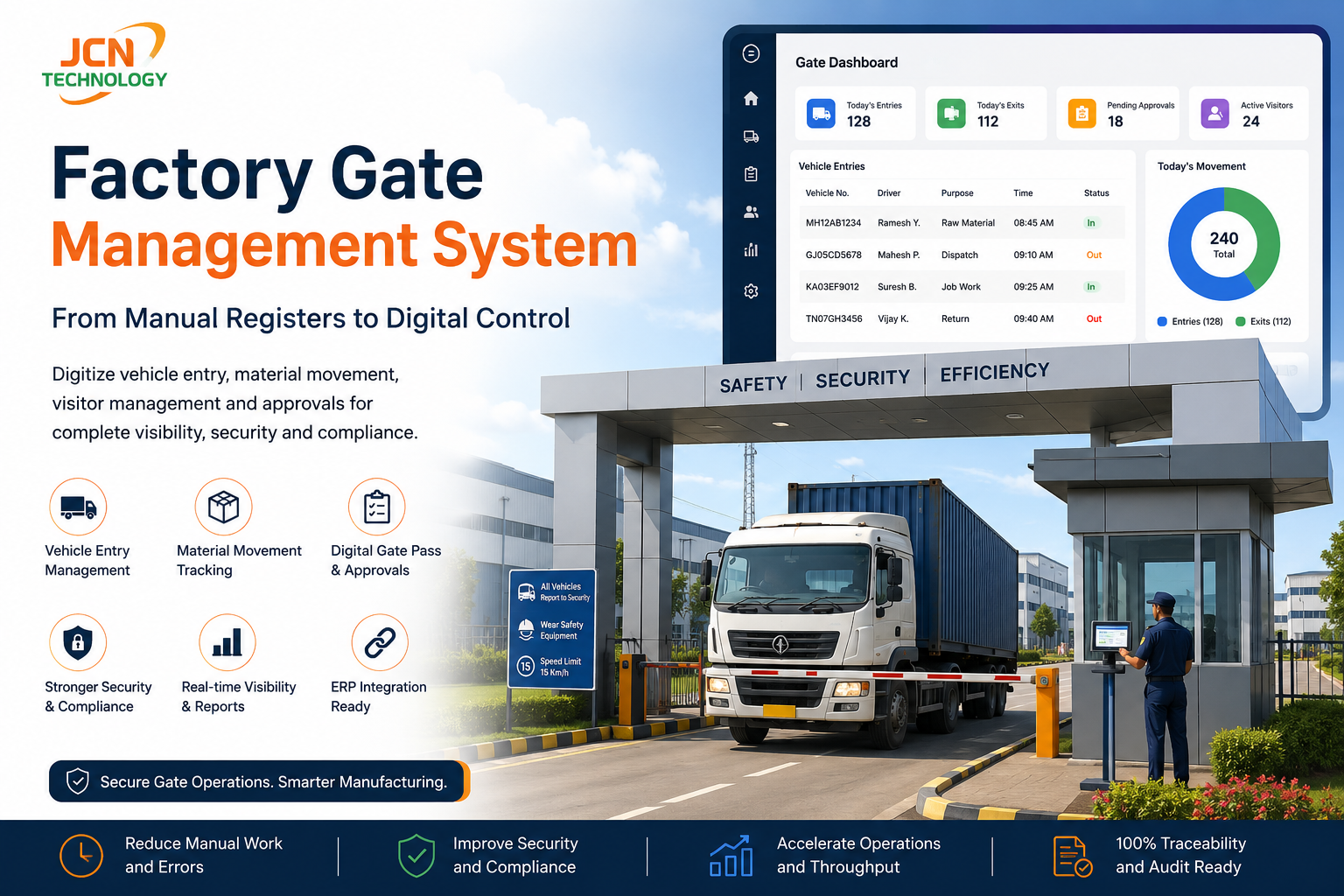
The Smarter Alternative
Modern manufacturing requires better visibility, stronger security, and faster decision-making.
A digital gate management platform helps organizations:
- Digitize vehicle entry and exit
- Track material movement
- Automate gate pass approvals
- Improve audit readiness
- Integrate with ERP systems
- Generate real-time operational reports
Instead of managing multiple registers and spreadsheets, businesses gain a centralized system that improves efficiency across departments.
Conclusion
Manual gate entry systems may have worked in the past, but growing manufacturing operations require greater control, visibility, and traceability.
Digitizing gate operations not only improves security and compliance but also reduces delays, minimizes errors, and provides valuable operational insights.
As manufacturers continue investing in digital transformation, modernizing gate operations is an important step toward building a smarter and more efficient facility.